
Choosing where to live in Spain is one of the biggest decisions of your move - and it has massive implications for your budget, lifestyle, and happiness. The wrong city can mean paying 40% more in rent for a lifestyle you could get cheaper elsewhere. This guide ranks the best Spanish cities for expats across cost of living, healthcare access, climate, infrastructure, and expat community size, with specific recommendations based on whether you’re retiring, working remotely, or relocating with a family.
Quick Comparison: Spain’s Top Expat Cities
| City | Monthly Cost (Single) | Monthly Cost (Couple) | Avg. Rent (1BR Center) | Climate | Expat Community | Best For |
|---|---|---|---|---|---|---|
| Valencia | €1,400-€1,800 | €2,200-€2,800 | €800-€1,100 | Mediterranean | Large, growing | Best overall value |
| Málaga | €1,500-€2,100 | €2,400-€3,300 | €900-€1,200 | Mediterranean | Large | Retirees, sun-seekers |
| Alicante | €1,200-€1,500 | €1,900-€2,300 | €650-€900 | Mediterranean | Medium | Budget-conscious expats |
| Madrid | €1,800-€2,400 | €2,800-€3,600 | €1,200-€1,800 | Continental | Very large | Career professionals, culture |
| Barcelona | €1,900-€2,500 | €3,000-€3,800 | €1,300-€1,900 | Mediterranean | Very large | Digital nomads, creative fields |
| Seville | €1,200-€1,600 | €1,900-€2,500 | €700-€950 | Hot Mediterranean | Medium | Culture lovers, affordability |
Costs include rent, food, transportation, utilities, and insurance. They assume a moderate lifestyle - not luxury, not ultra-frugal. For a detailed breakdown of monthly expenses across categories, see our detailed expense breakdown.
Valencia: Best Overall for Expats

Valencia has dominated expat city rankings for three consecutive years, and for good reason. It combines Mediterranean climate, affordable living, excellent food culture, and a walkable/bikeable city layout that most Spanish cities can’t match. Valencia was also named the European Green Capital for 2024 - a recognition of its investment in sustainability, bike infrastructure, and public green spaces like the Turia Gardens.
Why expats love it:
- Cost: 30-40% cheaper than Madrid or Barcelona for comparable quality of life
- Climate: 300+ sunny days per year, mild winters (average January: 11°C/52°F)
- Beach access: City beaches within 15 minutes of downtown
- Food: Home of paella, Central Market, thriving restaurant scene
- Size: Large enough for full urban amenities (population ~800,000), small enough to navigate easily
- Infrastructure: Modern metro, extensive bike lanes, high-speed rail to Madrid (1h 40m)
Drawbacks: Job market is smaller than Madrid or Barcelona. Summer heat (July-August average: 30°C/86°F, though not as extreme as Seville). Some bureaucratic offices have limited English.
Best neighborhoods: Ruzafa (trendy, walkable), El Cabanyal (beach proximity, gentrifying), Ensanche (central, residential), Benimaclet (affordable, young, near university).
For retirees: Excellent. Affordable healthcare, mild winters, flat terrain for walking, and an established expat community centered around neighborhoods like El Cabanyal and the surrounding Horta Nord towns.
For digital nomads: Strong coworking scene, good internet infrastructure, and the cost savings compared to Barcelona make it increasingly popular. The city’s compact layout means most coworking spaces are walking or biking distance from central apartments.
Málaga: Best for Retirees and Sun-Seekers
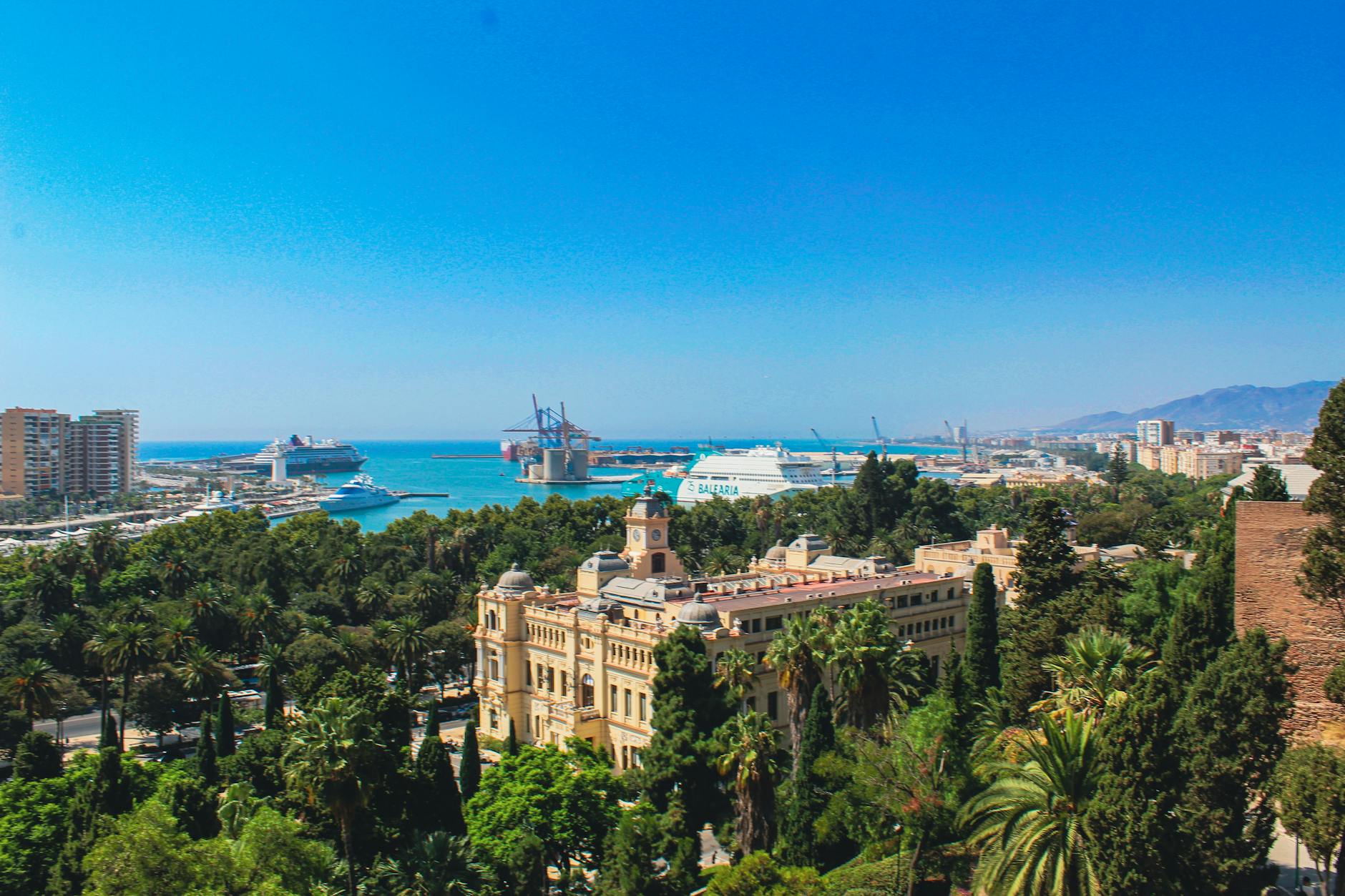
Málaga has reinvented itself from a gateway-to-the-Costa-del-Sol into a destination city. The old town has been transformed with museums, restaurants, and pedestrian zones, while the climate is among the warmest in mainland Europe.
Why expats love it:
- Climate: Warmest major city in Europe. Average winter highs of 17°C/63°F
- Airport: Direct flights to most European and some US cities
- Cost: Competitive with Valencia, significantly cheaper than Barcelona
- Culture: Over 40 museums, vibrant arts scene, historic center
- Tech hub: Growing tech sector means better coworking and international community
Drawbacks: Summer heat can be intense (35°C+ regularly). Tourist crowds in summer. Traffic congestion. Less flat than Valencia for walking.
Best neighborhoods: Centro Histórico (walkable, historic), Pedregalejo (beachside, local feel), El Palo (affordable beach district), Teatinos (modern, residential).
Alicante: Best Budget Option on the Coast

Alicante offers the lowest cost of living among Spain’s major coastal cities while maintaining solid infrastructure and a pleasant Mediterranean lifestyle. It also has one of the highest expat-to-local ratios in Spain - for some, that’s a pro (easy to make friends and find English-speaking services), while for others it means a less authentically Spanish day-to-day experience.
Why expats love it:
- Cost: The best property-price-to-income ratio of any major Spanish coastal city
- Climate: Similar to Málaga - warm, sunny, mild winters
- Airport: Well-connected international airport with budget airline routes
- Beach: Santa Bárbara Castle, Postiguet Beach, and quieter beaches nearby
- Healthcare: Good hospital network for a city its size
Drawbacks: Smaller city feel. Fewer cultural attractions than Valencia, Málaga, or Barcelona. More British/Northern European expat demographic than American.
Best for: Retirees and couples on fixed incomes who want coastal Mediterranean living at the lowest cost.
Madrid: Best for Career and Culture

Madrid is Spain’s capital and largest city. It’s where the jobs are, where the government is, and where the cultural scene is deepest. It’s also the most expensive option (though still cheaper than comparable US cities).
Why expats love it:
- Career opportunities: By far the strongest job market for international professionals
- Culture: Prado, Reina Sofía, opera, theater, nightlife that runs until dawn
- Food: From Michelin stars to €12 menú del día, the dining scene is extraordinary
- Transport: Best metro system in Spain, extensive commuter rail
- Central location: High-speed rail to every major Spanish city
Drawbacks: No beach (nearest coast is 3-4 hours). Continental climate means genuinely cold winters (0-5°C) and brutally hot summers (38-40°C). Rent has surged - a central 1-bedroom apartment now costs €1,200-1,800/month. The pace is fast. Spain’s 2023 Ley de Vivienda (Housing Law) introduced rent caps in designated zonas tensionadas (stressed housing zones), and landlords in both Madrid and Barcelona are increasingly switching to short-term “seasonal” contracts to bypass the law, making it even harder to find a stable long-term rental. For a single expat who doesn’t want roommates, budget at least €2,000-2,500/month for a comfortable life in Madrid.
Best neighborhoods: Salamanca (upscale, family-friendly), Chamberí (residential, well-connected), Malasaña (hip, nightlife), Retiro (near the park, quieter), La Latina (historic, lively).
For professionals: Madrid is the obvious choice if you need to network, find employment, or be near corporate offices. The Beckham Law tax benefits make it especially attractive for high earners relocating with a company.
Barcelona: Best for Digital Nomads and Creatives

Barcelona offers a unique combination: Mediterranean coast, world-class architecture, a massive international community, and Spain’s strongest startup ecosystem. It’s expensive - but for some expats, it’s worth it.
Why expats love it:
- Beach + city: Urban beaches integrated into city life
- Startup/tech scene: Spain’s biggest tech ecosystem, active coworking community
- International feel: Extremely cosmopolitan, easy to get by in English
- Architecture and design: Gaudí, the Gothic Quarter, El Born
- Food: Boqueria Market, innovative restaurants, Catalan cuisine
Drawbacks: The most expensive city on this list. Petty theft is a real problem (pickpocketing). Tourist overcrowding in central neighborhoods. The Catalan independence movement creates political tension. Rental market is extremely tight - Barcelona was the first region to enforce Ley de Vivienda rent caps under the zonas tensionadas designation, and landlords are responding by shifting to seasonal contracts or pulling units off the long-term market entirely. As in Madrid, expect to budget €2,000-2,500/month minimum as a single expat for a comfortable setup without roommates. San Sebastián, while not covered in detail here, is in another league of expensive - often rivaling Barcelona while offering a fraction of the housing stock.
Best neighborhoods: Eixample (central, grid layout), Gràcia (village feel, creative), Poblenou (tech hub, 22@ district), Barceloneta (beach proximity), Sarrià (family-friendly, quiet).
Seville: Best for Culture on a Budget

Seville delivers Spain’s most dramatic architecture, the soul of flamenco, and some of the country’s lowest living costs - but with a significant caveat: summer heat.
Why expats love it:
- Cost: Among the cheapest major cities in Spain
- Culture: The Alcázar, the Cathedral, flamenco, Semana Santa, Feria de Abril
- Food: Tapas capital of Spain (and many places still serve free tapas with drinks)
- Architecture: Moorish, Gothic, Renaissance - some of Spain’s most beautiful buildings
- Pace: Relaxed, traditional, deeply Spanish
Drawbacks: Summers are severe - Seville regularly hits 40-45°C (104-113°F) in July and August. Smaller international community. Fewer English-speaking services than coastal cities. Job market is limited.
Best for: Culture-focused retirees, writers, artists, and anyone who values authenticity and affordability over beach access and international amenities.
How to Choose: Decision Framework
Choose Based on Your Priority
| If Your Priority Is… | Go To… |
|---|---|
| Best overall value | Valencia |
| Warmest winters | Málaga |
| Lowest cost | Alicante or Seville |
| Career/jobs | Madrid |
| Tech/startups | Barcelona |
| Culture depth | Madrid or Seville |
| Beach lifestyle | Valencia, Málaga, or Barcelona |
| Family with kids | Valencia or Madrid |
| Retirement | Valencia, Málaga, or Alicante |
By Expat Type
Retirees (NLV holders): Valencia or Málaga. Both offer mild climates, affordable healthcare, established expat communities, and the right balance of amenities and cost. Your NLV income of €28,800/year for a single applicant goes much further in these cities than in Madrid or Barcelona.
Digital nomads (DNV holders): Barcelona or Valencia. Barcelona has the stronger coworking ecosystem; Valencia offers similar quality at 30-40% less cost. Your choice depends on whether you prioritize networking opportunities or savings.
Families: Valencia or Madrid. Valencia offers the best schools-to-cost ratio and is extremely family-friendly. Madrid has the widest selection of international schools but at significantly higher cost - our rundown of education options covers the full landscape.
Part-year residents: Málaga or Alicante. Both have international airports with year-round connections, making it easy to split time between Spain and your home country.
Scouting Before You Commit
Don’t choose a city from your laptop. Spend time in your top 2-3 options before signing a lease. A two-week scouting trip that includes Valencia, Málaga, and one other contender gives you firsthand experience with neighborhoods, commute patterns, grocery stores, and the general vibe.
Walk the neighborhoods at different times of day. Visit the local health center. Check internet speeds in the apartments you’re considering. Eat at the restaurants you’d actually frequent, not the tourist spots. Our guide to planning a scouting trip covers exactly what to evaluate and how to structure your time.
Common Mistakes
Choosing based on vacation memories. The city where you had a great holiday may not be the city where you want to live. Tourism hubs like Barcelona’s Gothic Quarter are wonderful to visit and miserable to live in full-time.
Ignoring summer heat. Seville and inland cities hit 40°C+ for weeks. If you can’t handle extreme heat, focus on coastal cities with sea breezes - Valencia, Málaga, and Alicante all benefit from Mediterranean moderation.
Underestimating Madrid’s winters. Madrid sits at 650m elevation on a high plateau. Winters are genuinely cold, with temperatures regularly dropping to 0-5°C and occasional snow. If you’re leaving the US for warm weather, Madrid isn’t it.
Skipping smaller cities. Granada, San Sebastián, Palma de Mallorca, and other mid-sized cities offer excellent expat lifestyles. This guide focuses on the most popular options, but don’t dismiss cities with smaller expat communities - they often deliver the most authentic Spanish experience.
Bottom Line
Valencia is the best all-around choice for most American expats - it combines Mediterranean climate, affordable cost of living, excellent healthcare, and a growing international community. Málaga is the runner-up for retirees who prioritize warm winters. Madrid wins for career-focused professionals. Barcelona works for digital nomads willing to pay a premium for its tech ecosystem.
Whichever city you’re considering, start with a scouting trip to experience it firsthand. And if you haven’t decided on your visa path yet, our visa finder quiz can help you determine whether the NLV, DNV, or another option fits your situation best.